When the first real heat wave rolls through Dane and Rock Counties, our phones light up. The most common call we get in June goes something like this: “My AC is running, but the house won’t cool down.”
Nine times out of ten, the culprit is one of two things: low refrigerant or a failed capacitor. Both problems sneak up on Wisconsin homeowners after the unit has been sitting idle since September, and both have very different fixes.
As a fully licensed electrical and HVAC contractor serving Madison since 2005, we want to walk you through what’s actually happening inside your system, why these issues are so common in our climate, and what your options are when the cool air stops flowing.
Why Your AC Stops Cooling: The Two Most Common Culprits
Air conditioners are surprisingly simple machines with two non-negotiable ingredients: refrigerant to absorb heat, and electrical components to keep the system running. When either one fails, you get the same frustrating symptom, air blowing from the vents that isn’t actually cold.
Understanding the difference matters because one is an electrical repair and the other is a sealed-system repair, and the cost and timeline are very different.
Low Refrigerant: The Slow Leak You Can’t See
Refrigerant is the chemical that cycles through your AC and pulls heat out of your home. Here’s the part most homeowners don’t realize: your system isn’t supposed to “use up” refrigerant. It’s a closed loop. If you’re low, you have a leak, period.
The most common signs we see in Madison homes are warm air from the vents, ice forming on the copper lines outside, hissing or bubbling sounds near the indoor coil, and electric bills that jumped without any change in your habits. Older systems in Verona, Middleton, and the surrounding Dane County area are especially prone to slow leaks at the copper flare fittings, evaporator coil, or service valves.
We’ve also seen plenty of leaks caused by vibration over a decade of use, corrosion from humid summers, or pinhole damage from rodents in older basements.
Failed Capacitors: The Small Part That Stops Everything
A capacitor is a small cylindrical component inside your outdoor AC unit that gives the compressor and fan motors the jolt of electricity they need to start. When a capacitor fails, and they all fail eventually, your AC may hum but not start, the outdoor fan might not spin, the compressor may try to start and then click off, or the system may short-cycle every few minutes.
Capacitor failure is the single most common HVAC repair we make in early summer across Madison, Fitchburg, and Sun Prairie. Wisconsin’s temperature swings are brutal on these parts: the freeze-thaw cycles, summer heat soak, and electrical surges from spring thunderstorms all shorten capacitor life.
The good news is that a capacitor replacement is a straightforward, affordable repair when caught early. The bad news is that running a system with a struggling capacitor can burn out the compressor, and a compressor replacement costs many times more.
Common Questions Madison Homeowners Ask About AC Refrigerant and Capacitor Problems
How do I know if my AC needs more refrigerant or a new capacitor?
The quickest tell is what the outdoor unit is doing. If the fan and compressor are running but the air inside is warm, and especially if you see ice on the lines, refrigerant is the more likely cause. If the unit is humming but the fan isn’t spinning, or if the system clicks on and shuts off seconds later, it’s almost always a capacitor.
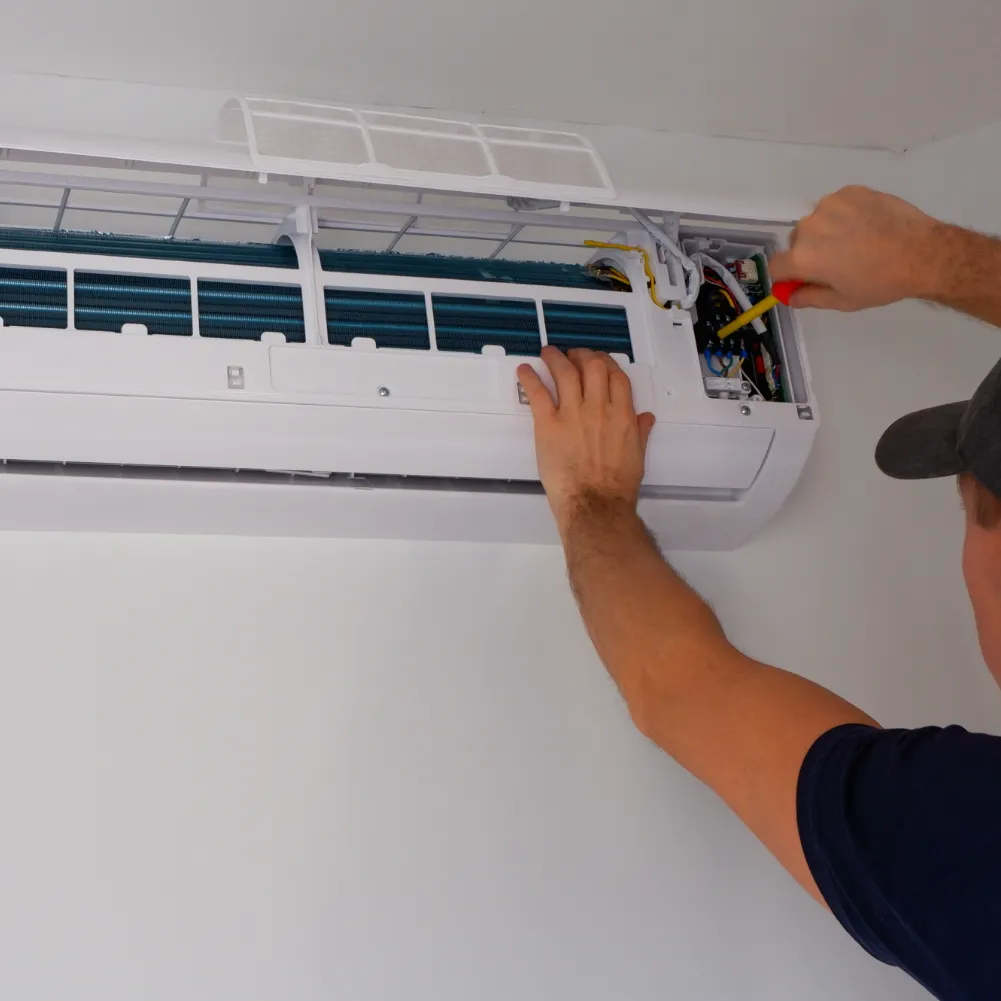
That said, we don’t recommend guessing. A proper diagnostic uses gauges to check refrigerant pressure and a multimeter to test capacitor microfarads. Both tests take a licensed HVAC tech less than 30 minutes.
Can I just add refrigerant to my AC every summer?
We get this question constantly – and we understand the appeal – adding refrigerant is cheaper than finding a leak. But it’s a short-term fix that gets more expensive every year. Refrigerant doesn’t evaporate; if your system is low, there’s a hole somewhere.
Topping it off without finding the leak means you’re paying for refrigerant that’s leaking into the atmosphere, which is also a violation of EPA regulations for technicians. We always recommend a leak search first, then a repair, then a proper recharge. That’s the only fix that lasts.
How long does a capacitor last in a Wisconsin AC unit?
Most capacitors are rated for 10 to 20 years, but Wisconsin’s climate cuts that down. We typically see capacitors fail between years 5 and 10 in our service area, faster if the unit is in direct afternoon sun or sees frequent power surges from summer storms.
If your system is more than 8 years old and you’ve never replaced the capacitor, it’s worth having it tested during your next tune-up, a part replaced proactively beats a compressor replacement after the fact.
Is my AC dangerous to run with low refrigerant or a bad capacitor?
Dangerous to you personally, no. Dangerous to the equipment and your bank account, absolutely. Low refrigerant causes the compressor to overheat and can lead to compressor burnout, which essentially totals the outdoor unit.
A failing capacitor forces the motors to draw too much current trying to start, which damages the windings on the compressor and fan motor. In both cases, what could have been a sub-$500 repair becomes a $3,000 to $7,000 replacement. If your system isn’t cooling properly, shut it off and call us before you keep running it.
Why does this always seem to happen on the hottest day of the year?
Two reasons. First, your AC sat idle for nine months, small problems that developed last fall don’t become noticeable until the system has to actually work again. Second, the hottest days demand peak performance, and that’s when weak components finally give out.
The fix is simple: schedule a tune-up before the real heat hits. Our HVAC maintenance service catches refrigerant leaks and weak capacitors before they leave you sweating.
How much does it cost to fix refrigerant or capacitor problems?
We use flat-rate pricing, so you’ll know the cost before we start any work. A capacitor replacement is one of the more affordable HVAC repairs and is typically completed in a single visit.
Refrigerant repairs vary more depending on where the leak is, how much refrigerant your system needs, and whether your unit uses older R-22 (which is no longer manufactured and is significantly more expensive) or the current R-410A or R-32.
We always provide a clear written quote before any work begins, and financing through Wisetack is available if you need it.
A Real Madison Service Call: How a $25 Part Almost Cost a $4,000 Compressor
Last month, we took a call from a homeowner in a Near West Side Madison neighborhood. Their 9-year-old central AC was running constantly but the upstairs bedrooms wouldn’t drop below 78 degrees, even with the thermostat set to 70. When our technician arrived, the outdoor unit was running but the fan was spinning slowly and the compressor was making a labored humming sound.
A quick multimeter test showed the dual-run capacitor had dropped from its rated 45/5 microfarads down to about 28/3, weak enough that the motors were drawing nearly double their normal amperage just to keep running. We replaced the capacitor on the spot, the system caught up within an hour, and the homeowner’s next electric bill dropped by about $40.
Had they waited another two or three weeks, the compressor windings would almost certainly have burned out, turning a same-day repair into a multi-day replacement project. That’s the case for catching these problems early, and it’s the case for an annual tune-up.
Why Madison Homeowners Trust Helping Hands Electric & HVAC
We’ve been serving Madison and the surrounding Dane County and Rock County communities since 2005. Our HVAC team is fully licensed, and our pricing is flat-rate, so there are no hourly surprises.
We believe in providing honest recommendations, not high-pressure sales tactics. If your capacitor needs replacing, that’s what we’ll recommend. If we identify additional concerns or options that could improve comfort, efficiency, or reliability, we’ll explain them clearly and let you decide what’s right for your home.
If you have a refrigerant leak, we’ll find it, explain the repair options, and help you understand the pros and cons of each solution. And because we’re also a licensed electrical contractor, we can diagnose those gray-area problems, like whether your AC issue is actually an electrical issue at the panel or disconnect without having to call a second company.
If you’re reading this with the AC running and the house still warm, don’t wait until the weekend. The sooner we can inspect your system, the better the chance of catching a small issue before it turns into a larger repair.
Schedule AC Repair in Madison, WI, Same-Day Service Available
Don’t spend another night sweating through a Wisconsin heat wave. If your AC isn’t cooling, the team at Helping Hands Electric & HVAC is ready to diagnose your refrigerant or capacitor issue with flat-rate pricing and same-day service across Madison, Fitchburg, Verona, Middleton, Waunakee, Monona, Oregon, Stoughton, Sun Prairie, and Janesville.
Visit our HVAC services page to learn more about our installation and repair work, browse related articles on our blog, or head straight to our contact page to book your appointment. Call us at (608) 219-8522 to get cool air back in your home today.
If you need emergency electrical service or want to better protect your home or business against unexpected outages or hazards, reach out to Helping Hands Electric. Our licensed electricians deliver prompt, reliable support throughout Madison. Call (608) 585-8413 to get help right away and take the first step toward long-term safety and peace of mind.